Inverter and battery storage
Lithium storage sized to carry critical loads through an outage without a break in supply.
On an island or at the end of a long rural feeder, grid power is not a given. Guests forgive a lot, but not a dark room and a warm minibar. Storage and standby generation keep the property running through an outage, and monitoring means you learn about a fault before a guest does.
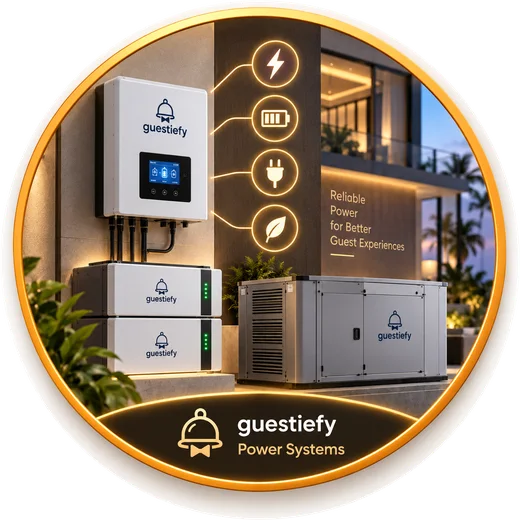
Lithium storage sized to carry critical loads through an outage without a break in supply.
Automatic generator start and transfer for longer outages, with scheduled test runs.
Designed to accept solar input where roof or ground area allows it.
Critical loads — locks, servers, lighting, cold storage — carried first, comfort loads shed if needed.
State of charge, load, fuel level and generator hours on the same dashboard as everything else.
Low fuel, failed test starts and battery faults raise an alert to engineering immediately.
That depends entirely on the load you choose to carry and the capacity installed. Sizing is done from your actual consumption during the site survey — anyone quoting a runtime before seeing your loads is guessing.
Usually yes. Existing sets can typically be brought under monitoring and automatic transfer control.
No. Storage and standby generation stand on their own. Solar improves running costs where there is space for it.
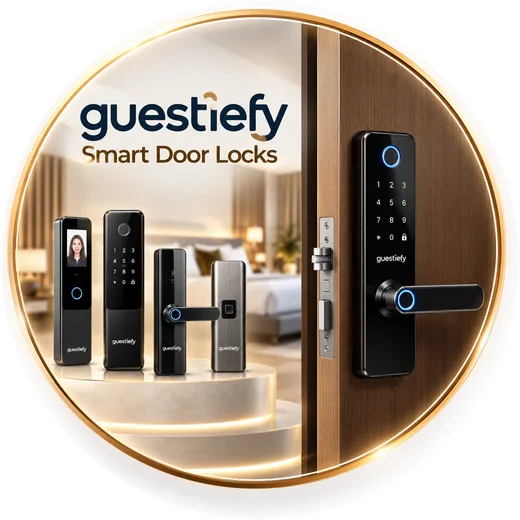
Fingerprint, palm vein, finger vein, face or password unlocking, with a visual intercom built in. Every entry logs to the same guest-safety record as the front desk.
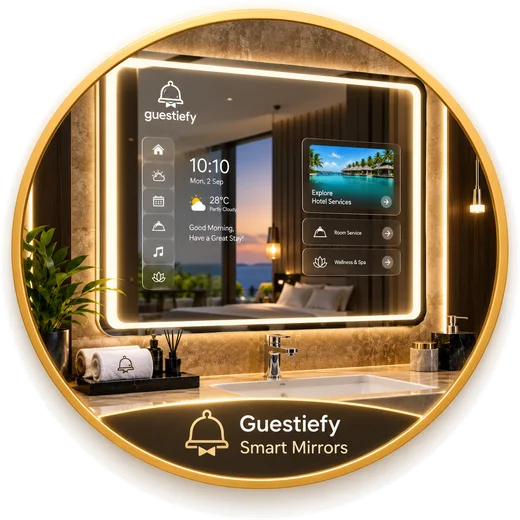
Bathroom and entrance mirrors that double as screens — touch controls, hotel services, and room requests from the glass itself.
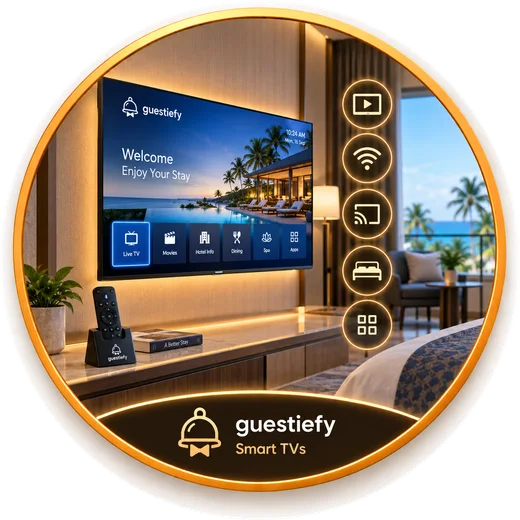
In-room entertainment that's also a control point, with the property dashboard built into the home screen.
Power Systems reports into Guestiefy IoT alongside every other device on property, so a guest’s room and your operations run off the same data.