Learns existing remotes
Captures the codes from whatever remote is already in the room, including obscure brands.
The cheapest way to make a room smart is often to leave the equipment alone. An infrared bridge learns the remote controls already in the room and repeats them on command, so a ten-year-old air conditioner answers to the same panel as everything else.
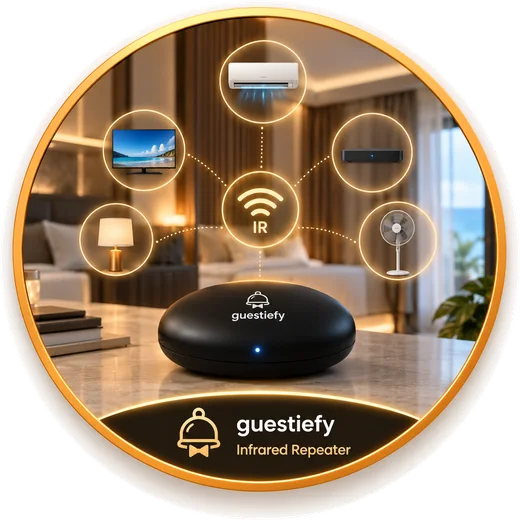
Captures the codes from whatever remote is already in the room, including obscure brands.
Pre-loaded codes for the common air conditioning, television and AV brands.
A single unit reaches the devices in a typical guest room without line-of-sight fiddling.
Infrared devices join scenes, so a sleep scene can turn the TV off and set the AC together.
Plugs in and pairs over the room network. No cabling and no equipment changes.
The practical route for older properties that are not refurbishing yet.
If it has a handheld remote, almost certainly. The bridge learns codes directly where a brand is not in the library.
A gateway reads and writes state, so it knows the actual setpoint. An infrared bridge only sends commands, like a remote. The gateway is better where it is supported; the bridge covers everything else.
Yes, typically one unit covers a standard room. Larger suites may need two.
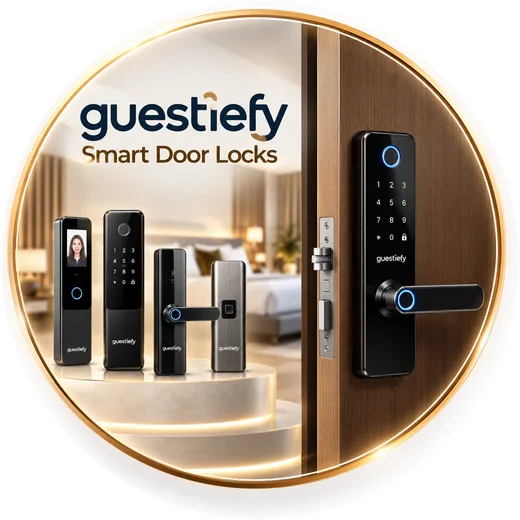
Fingerprint, palm vein, finger vein, face or password unlocking, with a visual intercom built in. Every entry logs to the same guest-safety record as the front desk.
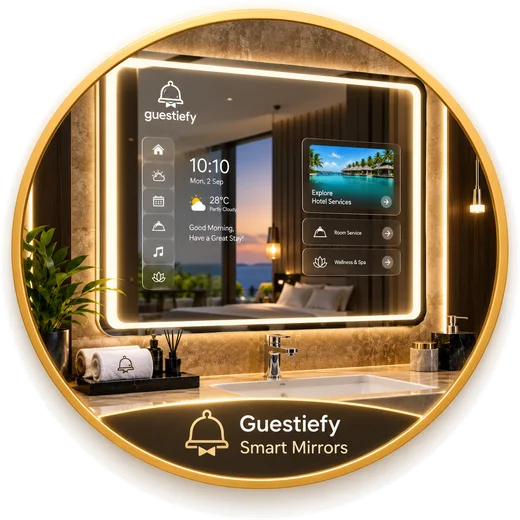
Bathroom and entrance mirrors that double as screens — touch controls, hotel services, and room requests from the glass itself.
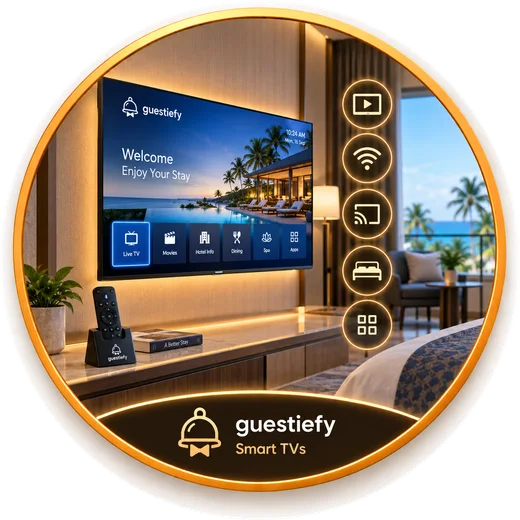
In-room entertainment that's also a control point, with the property dashboard built into the home screen.
Infrared Bridge reports into Guestiefy IoT alongside every other device on property, so a guest’s room and your operations run off the same data.